
Totle Floor Prep Solutions
Bathroom Strip Outs
Strip bathrooms back properly so the rebuild starts clean, compliant, and problem-free
Bathroom renovations fail when shortcuts are taken at the start. Tiles lifted without proper strip-out, membranes left behind, or slabs damaged during demolition all create issues that surface after waterproofing and tiling begin.
Total Floor Prep Solutions delivers professional bathroom strip outs that take wet areas back to a clean, workable slab, ready for waterproofing and rebuild, without guesswork or rework.
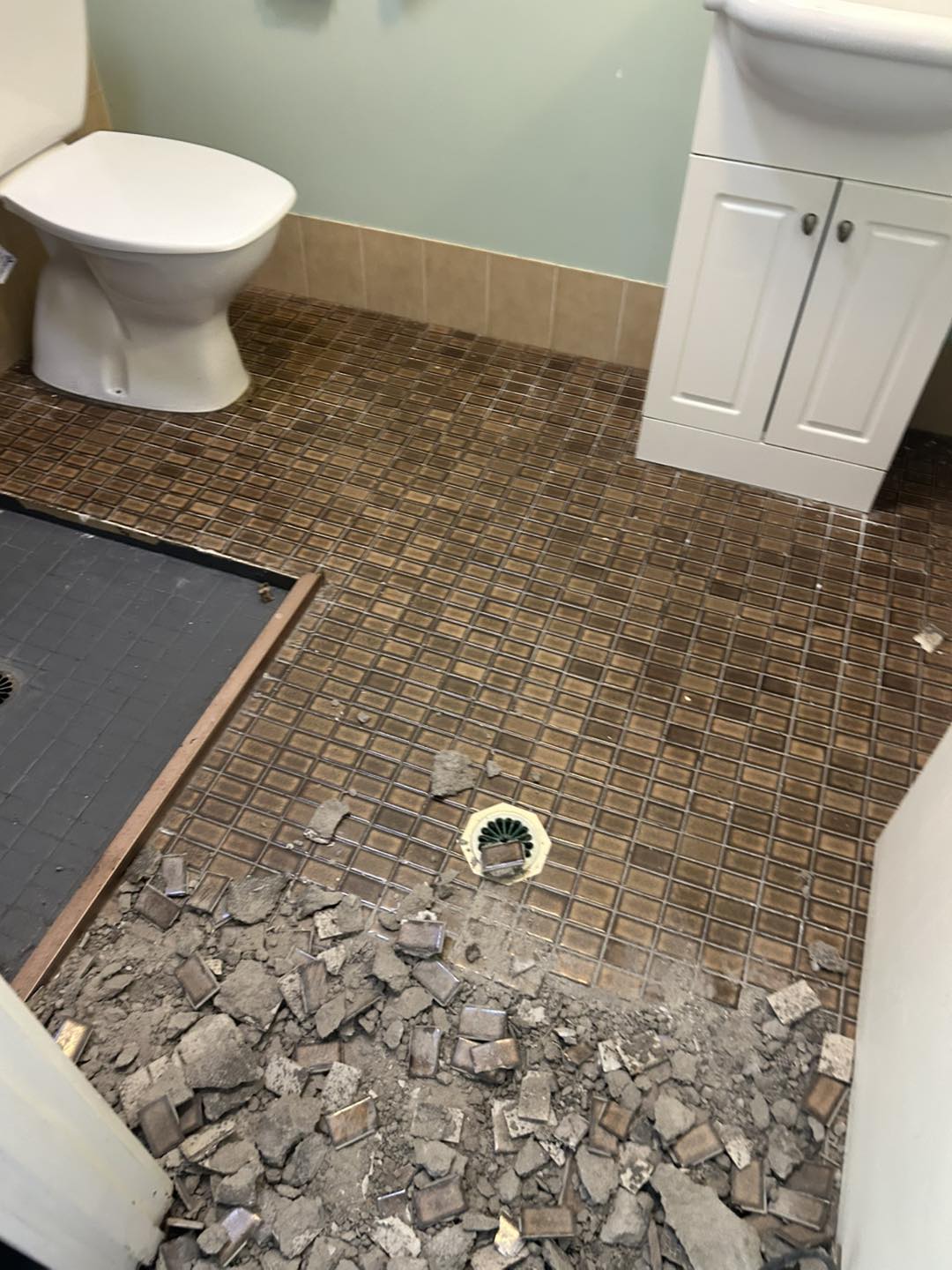
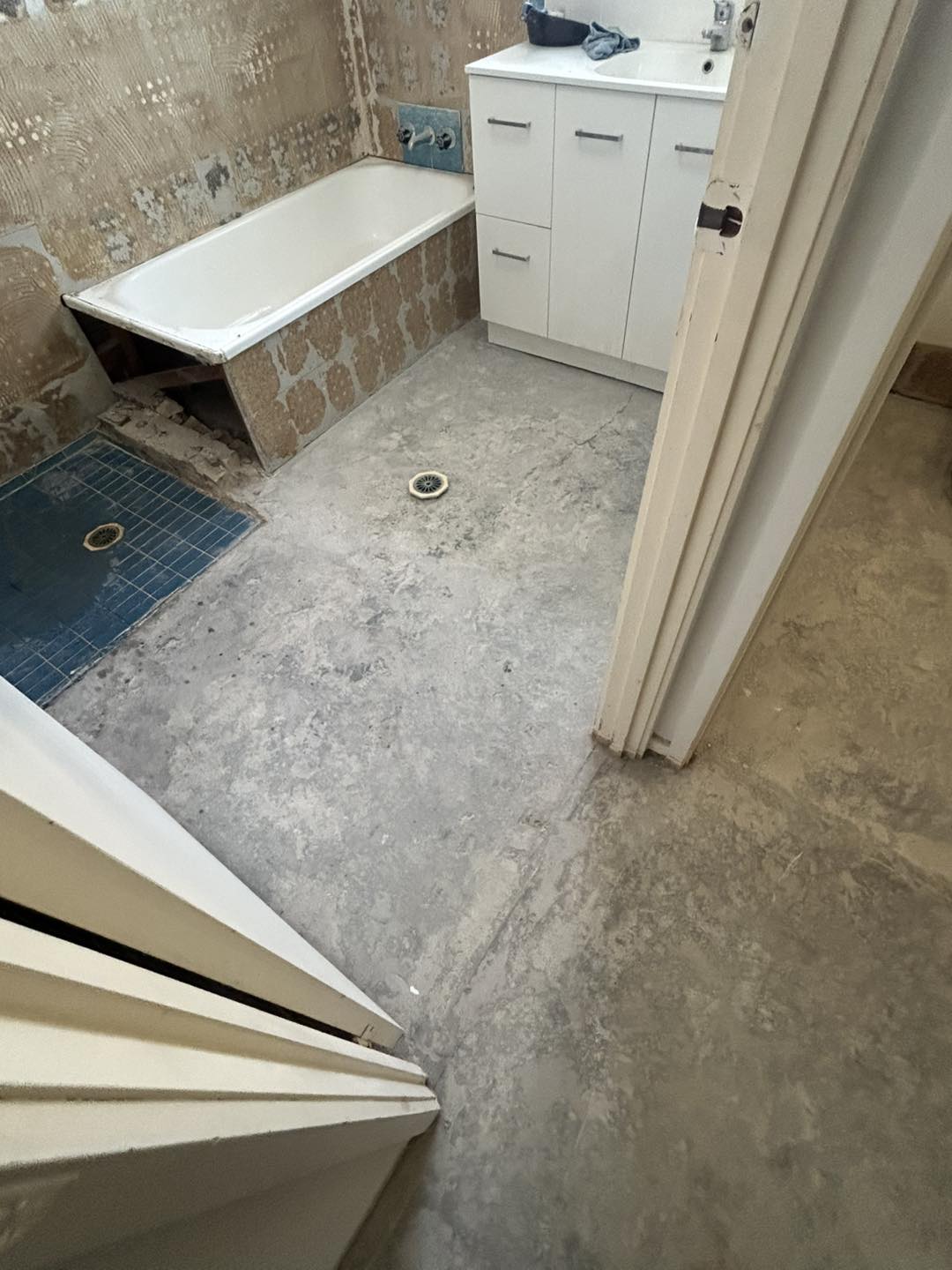
What a Proper Bathroom Strip Out Actually Means
When a Full Bathroom Strip Out Is Required
How Our Bathroom Strip Outs Are Done
Bathroom Strip Outs FAQs
They can remove tiles—but that’s not the same as a proper strip out.
Most trades stop once tiles are off. Adhesives, membranes, and uneven slab conditions are left behind, which then causes delays or rework when waterproofing starts.
A dedicated strip out ensures the slab is actually ready, not just exposed.
Because new waterproofing systems are designed to bond directly to concrete, not to old membranes.
Leaving waterproofing behind creates a weak bond layer. If that old membrane fails, the new one fails with it—often after tiling is complete.
Removing it upfront protects the entire renovation.
Small wet areas fail just as often as large ones—sometimes more.
Tighter spaces experience more moisture concentration, movement, and stress. Cutting corners in a small bathroom doesn’t reduce risk—it concentrates it.
If you’re paying for waterproofing and tiling, the base still needs to be right.
Not when it’s done properly.
We use controlled mechanical removal, not brute-force demolition. The goal is to remove what needs to go—tiles, glue, membranes—without scarring or weakening the slab.
This preserves the structure and avoids patchwork repairs later.
Because grinding over glue or membrane leaves bonded material behind.
That creates uneven adhesion and height issues, which show up later as cracked tiles, hollow spots, or waterproofing failure.
Grinding is used to remove residue, not hide it.
It prevents much larger costs later.
A proper strip out avoids:
Waterproofing rejection by certifiers
Tilers refusing to proceed
Failed inspections
Re-tiling due to leaks or debonding
Fixing a failed bathroom costs far more than preparing it correctly once.